Showing posts with label platform: gba. Show all posts

Tuesday, August 5, 2008

#251: Final Fantasy I & II: Dawn of Souls (2004, GBA)

It's hard to pinpoint exactly what is so appealing about the Final Fantasy series - many would say story and characters, and that may well work as an explanation for the more modern entries, or for Final Fantasy's IV and VI, but the NES titles were pretty damn popular as well, and they sure as hell weren't so thanks to a rich plot or characters (witness Final Fantasy I's nameless avatars, or its bizarre and confusing time traveling villain conceit).

The appeal lies, I think, in how the gameplay provides the player with the ability to customize a team of characters, while keeping this customization restrained enough to remain accessible. Remember, being able to select and equip a party of 4 characters from 6 classes is pretty restrictive for the RPG genre - more directly Dungeons and Dragons influenced titles (like Ultima or Wizardry - really any western RPG) pretty handily blew Final Fantasy out of the water on that front. But none of those other titles was as easily picked up and played. And none of those titles allowed for the sort of character based storytelling that these early Final Fantasy titles would attempt and which later Final Fantasy titles would achieve. These simplified mechanics also mean that there is none of the intimidation factor that I feel undercuts modern RPGs, although in this instance, things may be a bit oversimplified - the SNES-era Final Fantasy's struck the best balance of having something complex enough so as to be interesting, yet simple enough as to be readily understandable.

It should also be said that level grinding, though often criticized as being lazy game design (because, let's be honest, it is) can still a pretty compelling force, appealing in the same sort of 'killing time' fashion of a good puzzle game. There is a palatable sense of reward in fighting a boss and knowing that because you put in that time earlier, you're having an easier go of things now. It's the sort of thing that doesn't quite work on a console since it can't quite hold one's attention for the length of time it demands (at least it can't hold my attention), but works perfectly on a handheld where it can be done simultaneously with other semi-passive activities, like watching TV.


The version present on the GBA here pretty dramatically simplifies much of the gameplay mechanics here - gone are spell uses, replaced with magic points, for example. These changes have been pretty roundly criticized for dumbing things down, but I look at how stilted and awkward the mechanics were in the original, and how much grinding was required, and I have a hard time getting that upset. Taking something that is pretty obtuse and inaccessible and making it more playable is a pretty noble pursuit in my book.


Final Fantasy II gets beaten like a red-headed stepchild because it pretty much deserves it. Should we give some credit to Square for changing things up so dramatically here? Sure, I suppose, but what little brownie points they earned there is offset by the fact that the new system kinda sucks.

For the uninformed, Final Fantasy II changes things up by ditching experience points entirely for a system that doles out attribute and skill points based on how much you use those skills or attributes? Want to build up strength? Attack more. Want to build up magic? Use magic. Sounds like a cool idea, right? Well how bout, want to build defense? Get attacked. Want to build up hit-points? Lose hit-points. The version on the GBA here at least managed to make this system more tolerable than in the original - no longer can you lose your skill points through under-use, but the core problem still remains - that being that the style of play this system encourages feels so unnatural.

Take building magic skill here: the general Final Fantasy style encourages the player to conserve their magic - magic points are more difficult to recover, after all - leading players to have their mages mostly stand aside (by defending, or using some ineffectual, but free attack) for regular battles. Magic points are saved for difficult enemies, bosses, and general healing. That style doesn't fly here - do that and your mages will become so underdeveloped as to become useless. So instead one has to go about casting spells for every generic encounter. The whole system just feels very restrictive - because every in-battle action directly affects how your characters develop, the player begins to obsess over their every move in battle.


Ironically, the rest of the game is a pretty strong improvement over the original - the story is much stronger, featuring real and defined characters rather than the avatars of the original. Also the plotline isn't derailed by the dumb time travel premise. An interesting keyword system acts to liven up dialog and quests in general - yes, this is little more than taking the 'talk to this person' quest and turning it into a 'say this keyword to this person' quest, but for a 8-bit RPG? That's a pretty big change, furthermore, one not really ever duplicated again in the series.

Final Fantasy I & II: Dawn of Souls
Publisher: Nintendo
Developer: Square-Enix
Released: 11/29/2004
Obtained: Christmas 2004 (Gift)

7.5/10

Sunday, August 3, 2008

#220: Metroid: Zero Mission (2004, GBA)

I can't think of another game remake I approve of more heartily than Metroid: Zero Mission. The reason for this lies in looking at the title it is remaking, the original Metroid. To put it simply, when compared with every other title in the Metroid series, the original Metroid kind of sucks. Like, really sucks. Whereas every other Metroid has displayed tight control, interesting and varied environments, and exploration based gameplay that veers closely towards being aimless and arbitrary without actually being so, the original eschews all of these. The environments are ludicrously repetitive, objectives are obscure and inscrutable enough to make Simon's Quest blush, the controls are loose, and the way enemies spawn endlessly must have been a big inspiration to Ninja Gaiden. Now, all is not all bad there, Metroid did more for establishing atmosphere as a tenet of game design than any other 8-bit title I can think of, it established the wonderful Metroid formula, and as far as NES titles go its problems aren't especially damaging. Still, in the grand scheme of Metroid, the original had been relegated to the not really worth going back and playing pile.

So along comes Metroid: Zero Mission, which does a brilliant job of merging the excellent gameplay of Super Metroid with the general world and plot of Metroid (well, plot-wise it merges in the story built around the original, seeing as the original did not really have a plot in-game). The result is a pretty much perfect blend of of nostalgia (such as when one recognizes moments from the original) and fresh new ideas (like the excellent stealth sequence near the end of the game).

It's not a 1:1 remake, the order one acquires items has been jumbled around, the player is provided general waypoints to help overcome some of the more arbitrarily hidden tasks of the original, the level layouts have been pretty totally overhauled - the general structure is kept, but now individual areas actually look unique as opposed to the originals ludicrous repetitiveness. Now, this makes things feel somewhat smaller, but this works to its benefit - what good is a large world when each hallway is identical to that before it?

Metroid's excellent sound design loses some of its charm in the move to the GBA - the tracks are mostly the same, but they just don't feel quite right being orchestrated over being 8-bit - some of the sense of atmosphere is left behind in the transition from sparse to lush. The graphics, while obviously being a hell of a lot more detailed likewise undermine that sense of atmosphere - again, there is something to be said for sparseness over lushness. Also not helping things on the graphical front is the GBA's seeming inability to produce graphics that don't feel washed out (actually, it can produce them, it's just the original's lack of a light source forced developers to use a washed out style). One could actually make a strong case that Zero Mission here has the weakest atmosphere in the series.


Luckily for it, atmosphere isn't what makes Metroid great, gameplay is, and Zero Mission - despite the inclusion of waypoint assistance - does about the best job of letting the player loose to explore and discover since Super Metroid (well, discounting the Prime series).

Metroid: Zero Mission
Publisher: Nintendo
Developer: Nintendo R&D1
Released: 2/9/2004
Obtained: February 2004

9.0/10

Monday, July 28, 2008

#178: The Legend of Zelda: A Link to the Past & Four Swords (2002, GBA)

The idea behind Four Swords, turning the top-down Zelda titles we've always loved into a cooperative/competitive game, is so strongly compelling that it is a wonder that it didn't come sooner. The idea is that you, as Link, work with the other 3 Links to work through the dungeon while simultaneously competing for rupees. The answer to why this never took off as it should have may have something to do with the sort of technical restraints required to make it work. As presented/designed in this instance, the players cannot quite share the same screen - the competitive aspect requires that players be able to act in semi-secrecy at least occasionally. This also rules out split-screen, forcing us onto whatever platform most easily provides individual screens. Enter the Game Boy Advance, where this works perfectly. The problem with the GBA, however, is the barrier to entry - a system, cable, and game ~ some $160 in 2003 dollars.

Nintendo nearly fixed this with the GameCube's Four Swords Adventures, which put the action on a single screen... until a cave is entered, which then requires everyone playing to have a GBA and a GCN-GBA link cable, the same barrier to entry then presents itself (a barrier which sank the otherwise promising GCN-GBA venture entirely).


These barriers meant I was only able to play Four Swords enough to complete all 4 of the available dungeons once. What I could see, however, left me feeling pretty bad that this would, by its nature, never be able to become what it should have been. It isn't the only properly harmed in this way - the aforementioned Four Swords Adventures was, as was the excellent Pac-Man Vs. - all of them leave one wondering what would have happened had the GBA/GameCube had WiFi built in like the DS/Wii do (ironically, we still need to wonder, as the GBA/GCN debacle seems to have scared Nintendo off of ever utilizing the DS/Wii in the same way).

[The single-player portion of this title, Legend of Zelda: A Link to the Past, is reviewed here - this score reflects both halves of this title]

The Legend of Zelda: A Link to the Past & Four Swords
Publisher: Nintendo
Developer: Nintendo R&D2 / Flagship
Released: 12/2/1992
Obtained: Christmas 2002 (Gift)

9.0/10

Thursday, July 3, 2008

#253: WarioWare, Inc.: Mega Microgame$! (2003, GBA)

As good of a platform as the Game Boy Advance was, one would never make the mistake of calling it a hotbed of innovation. Look at the best titles available on the platform - a lot of SNES ports (the Super Mario Advance series, the Final Fantasy Advance series) , and remakes (Metroid: Zero Mission, River City Ransom EX). Even what completely original titles there were tended to be genre exercises - none of the Castlevania titles strayed very far from the Symphony of the Night tree, nor did Metroid Fusion stray far from Super Metroid. Mario & Luigi, while offering some innovative battle mechanics wasn't all that different than say Paper Mario or similar reductivist RPGs.

All of this makes Wario Ware all the more noteable. It isn't even that novel of a concept when you think about it. Mini-game collections had been around - most noteably in anthology-type sports titles - and the idea of a 'micro-game' was simply an extension of this. Wario Ware's brilliance, however, lied in the way these games were tied together - each game following the other with only a brief pause in between. The challenge came as much in keeping track of what was going on as it did in actually completing any of the tasks presented, the tasks usually coming down to a single timed button press.

Also remarkable is that somehow, for all its sequels, none has quite matched the frantic pace of the original (well, Twisted did, but I can make a better point if I ignore this for now). Touched somehow managed to feel outright slow - especially early in rounds before things sped up, while Smooth Moves was bogged down by the need to change controller positions between every game. The original succeeded by establishing early on that your control would never extend beyond the d-pad and the 'a' button. From here it was able to jump off to add entries from nearly every genre imaginable. It didn't even matter if any of these micro-games was actually any good, the game was never about them but rather about the game built around them. if a single title didn't work, it hardly mattered - it would be over in a second, and considering its entire raison d'etre was to serve as an obstacle for the game built around it, it's just as well if it doesn't quite work.

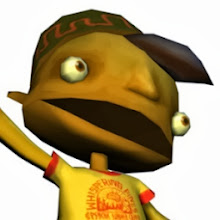
All of this is further aided by the wonderful amount of charm on display. Granted, the Wario Ware art-style frequently veers into the grotesque, but it still imbues the proceedings with a feeling of energy and liveliness that would be missed otherwise. The sound design (even on the woefully sub-par GBA sound hardware) is a marvel along these same lines, doing an excellent job at heightening tension while remaining all over the map and eclectic.


Mega Microgames simply managed to be leaner than any of its sucessors (and any of its later imitators). While it may be a shame that the Wario Ware series has caught a bit of the Katamari syndrome - a fresh idea or premise that gets diluted each successive time out, perhaps better called Wario Ware syndrome since Wario Ware did it first (of course M. Night Shyamalan did it before either of them) none of this detracts from Wario Ware's status as one of the most innovative titles of the last decade.

WarioWare, Inc.: Mega Microgame$!
Publisher: Nintendo
Developer: Nintendo R&D 1
Released: 5/21/2003
Obtained: Around Christmas 2003 (Giftcard)

9.0/10